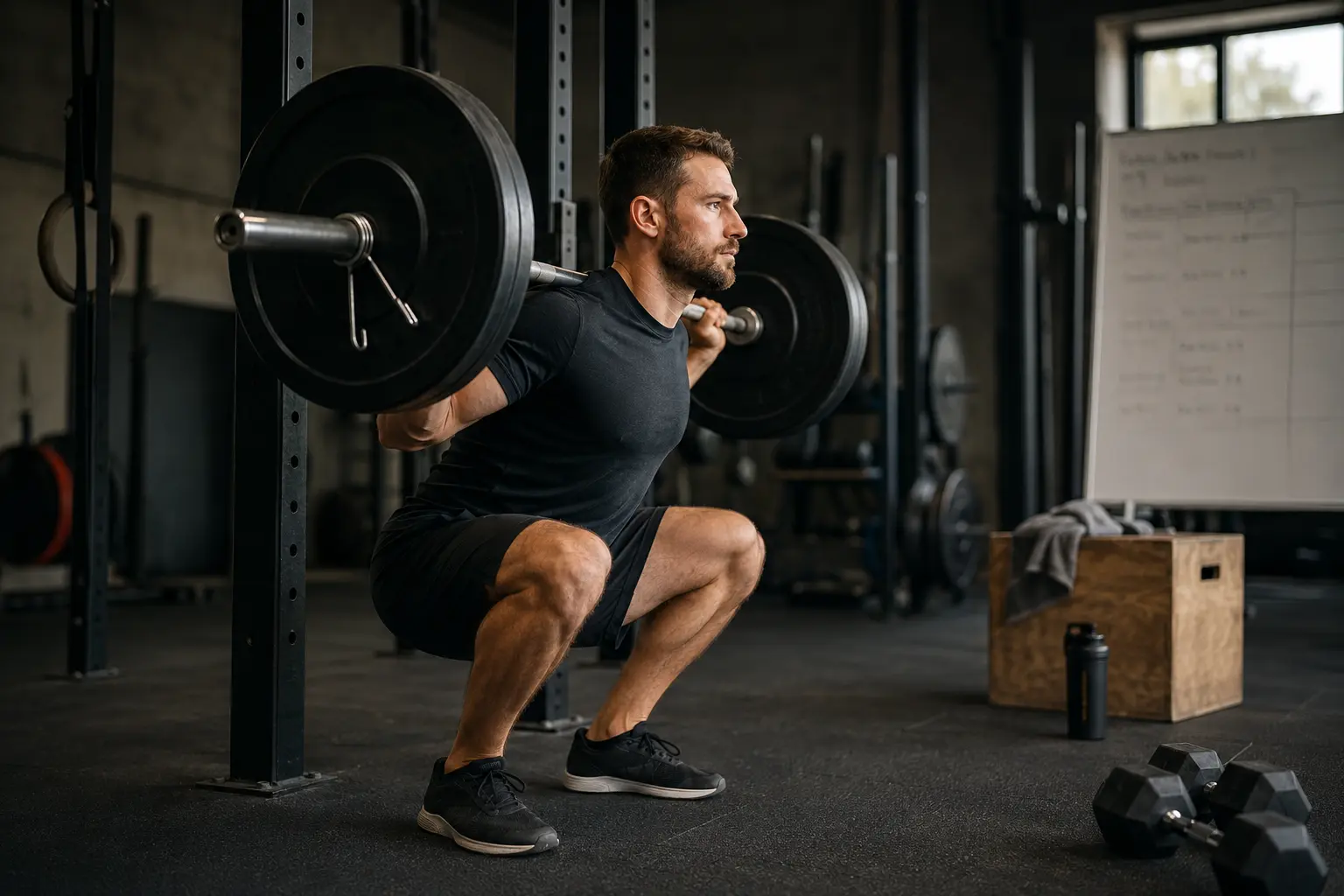
For an average adult doing 50 bodyweight squats at a normal, controlled pace, the honest answer sits somewhere around 15 to 25 calories. A heavier person burns more for the same set. Someone moving fast with little rest between reps burns a bit more than someone pacing themselves slowly. Add a barbell or a pair of dumbbells and that number climbs, usually into the 25 to 40 calorie range depending on the load and how the reps are performed.
That’s it. If you were expecting a bigger number, you’re not alone, and it’s worth understanding why the real figure is smaller than most people assume.
Why the Number Isn’t the Same for Everyone
Calorie burn during any exercise comes down to how much energy your body has to produce to do the work, and a few variables change that math directly.
- Bodyweight. A 200-pound person moving through a squat is lifting more mass than a 130-pound person doing the exact same movement, so they burn more energy per rep, not because they’re working harder mentally, but because there’s simply more weight being displaced.
- Pace. Fifty squats done in 90 seconds with almost no rest burns slightly more than fifty squats spread across five minutes with pauses between sets, since less recovery time means the body stays in a higher-effort state longer.
- Load. Weighted squats require more total force output than bodyweight squats, which increases the energy cost, though the relationship isn’t as dramatic as people expect, since adding weight also tends to slow the pace down.
- Fitness level. A well-trained lifter often moves more efficiently through a squat than a beginner, which can actually mean a slightly lower calorie cost for the same movement, since less energy gets wasted on wobbling, correcting balance, or fighting poor mechanics.
None of these factors change the number by an enormous margin. Squats simply aren’t a high-calorie-burn movement compared to something sustained like running or cycling, and understanding why helps set realistic expectations.
Read Also: How Many Squats Should You Do a Day?
How Exercise Scientists Actually Estimate This
Calorie estimates for strength exercises usually come from something called a MET value, short for metabolic equivalent of task. It’s a way of expressing how much energy an activity costs relative to sitting still.
Calisthenics-style bodyweight squats generally fall somewhere in a moderate MET range. The formula exercise scientists use looks like this: calories burned equals the MET value multiplied by body weight in kilograms multiplied by the duration in hours. Plug in a moderate MET value, a typical bodyweight, and the minute or two it takes to complete 50 reps, and the math lands right around that 15 to 25 calorie range for most adults.
This is also why fitness trackers and smartwatches often disagree with each other on strength training calorie counts. Most of them are built and calibrated around steady-state cardio, where heart rate tracks fairly predictably with effort. Strength training doesn’t follow that same pattern nearly as cleanly, so wrist-based calorie estimates for something like squats tend to be rough approximations at best, not precise measurements.
Bodyweight Squats vs. Weighted Squats: The Calorie Difference
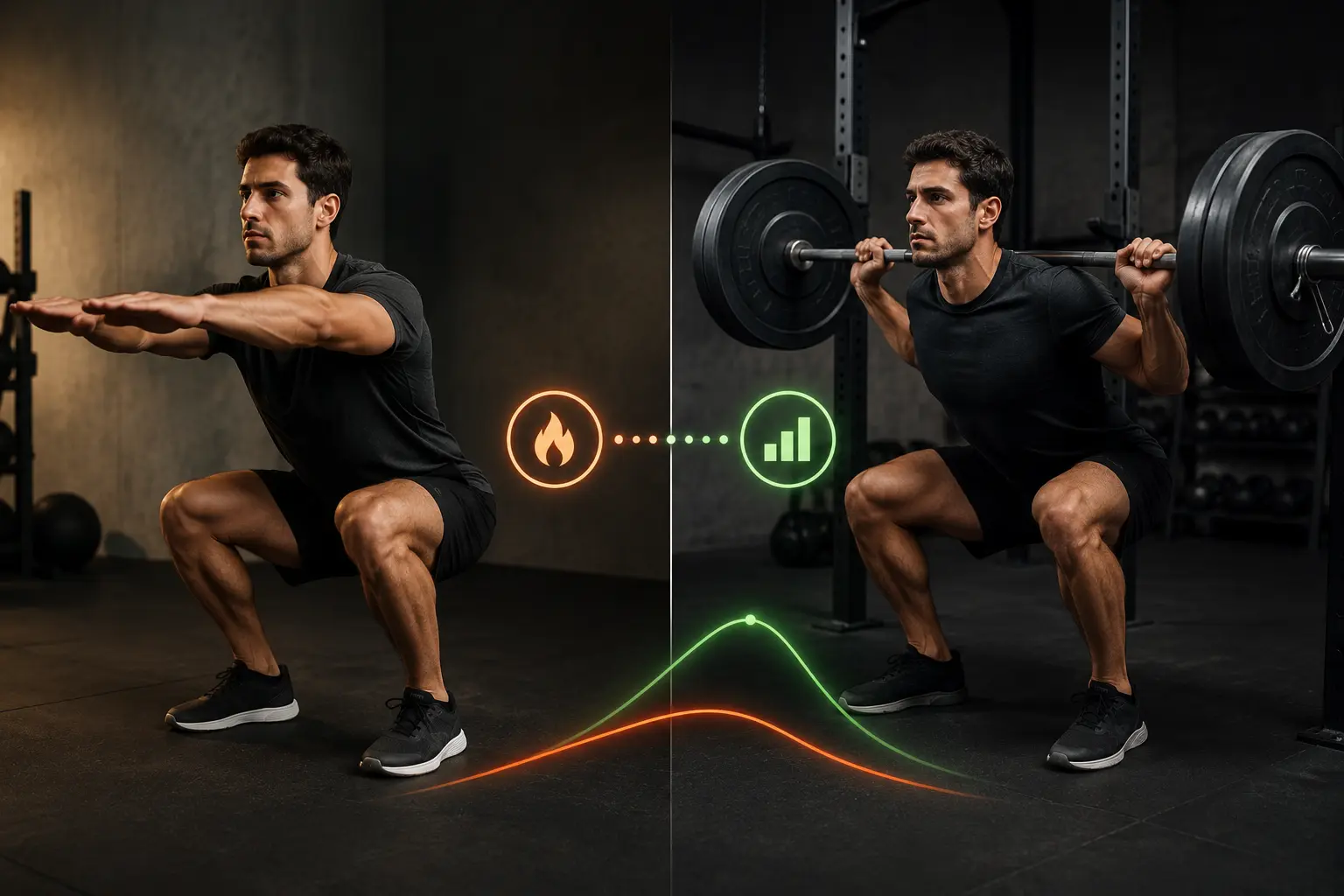
Adding load to a squat increases the total work being performed, and work costs energy. A person squatting an extra 45 pounds is moving more total mass through the same range of motion, which does push the calorie cost upward compared to bodyweight alone.
That said, the difference is smaller than a lot of people expect. Heavier loads almost always come with slower rep speed and more rest between sets, which partially offsets the extra energy cost per rep. Fifty bodyweight squats done briskly can sometimes burn a similar amount to a slower, heavier weighted set, simply because the total time under tension and pacing end up roughly comparable.
Where weighted squats actually pull ahead isn’t during the set itself. It’s afterward. Heavier resistance training tends to create a slightly larger EPOC effect (excess post-exercise oxygen consumption), meaning your metabolism stays mildly elevated for a period after a hard, loaded session compared to a light bodyweight one. It’s a modest effect, not a dramatic one, but it’s part of why strength training has a reputation for supporting body composition goals beyond what the in-the-moment calorie count suggests.
Does Rep Speed and Rest Change the Total?
Yes, though the effect is smaller than most people assume. Fifty squats performed continuously, with no pause, burn slightly more than fifty squats broken into sets with rest periods, because rest time counts as low-intensity recovery rather than active effort.
The gap here tends to be small in absolute terms though, often just a few calories difference either way. It matters more for someone using squats specifically as a conditioning tool, cycling through reps with minimal rest to keep heart rate elevated, than it does for someone squatting with proper form and normal recovery between sets. If your priority is learning a clean, safe squat pattern rather than maximizing calorie burn, rushing through reps to save time on rest usually isn’t worth the tradeoff in form quality.
Fifty Squats in Context
It helps to compare this number to other common activities so it doesn’t feel abstract. Fifty squats, taking roughly one to two minutes to complete, burns somewhere in the same range as about two to three minutes of brisk walking. A 20 to 30 minute jog, by comparison, typically burns somewhere between 200 and 400 calories depending on pace and body weight.
This isn’t meant to discourage squatting. It’s meant to set the right expectation. Squats aren’t positioned to compete with sustained cardio as a calorie-burning tool, and treating them that way usually leads to disappointment. Their actual value lies somewhere else entirely.
Why Squats Are Still Worth Doing, Calorie Count Aside
The number of calories burned during a set of squats is a small piece of what the exercise actually does for your body.
- Muscle building. Squats work the quadriceps, glutes, hamstrings, and core simultaneously, and more muscle mass raises your resting metabolic rate over time, meaning your body burns more energy even while doing nothing.
- Functional strength. Standing up from a chair, climbing stairs, and lifting objects off the floor all rely on the same movement pattern a squat trains directly.
- Bone density. Loaded squats place stress on the hips and spine that supports long-term bone health, something steady-state cardio does far less of.
- Long-term body composition. Strength training builds and preserves lean muscle during a calorie deficit far more effectively than cardio alone, which matters more for sustainable fat loss than any single workout’s calorie count.
This is also part of why powerlifting as a sport is built entirely around maximum strength rather than energy expenditure. Nobody training seriously for a heavier squat is thinking about calories mid-set. They’re thinking about depth, bar speed, and whether the lift would actually count under real standards.
Getting More Out of Every Rep, Not Just More Calories
If the goal is genuine progress rather than a slightly higher calorie count, the focus should shift toward quality and progressive overload rather than pace or rep-cramming.
A few things matter more than speed here:
- Full depth on every rep. A shallow squat trains less muscle through less range of motion, regardless of how many calories the tracker claims it burned.
- Consistent form under fatigue. The last rep of a set should look like the first, not a compromised version of it.
- Gradual load progression. Adding weight slowly over weeks builds real strength, which does more for long-term metabolism than any single high-rep, low-rest session.
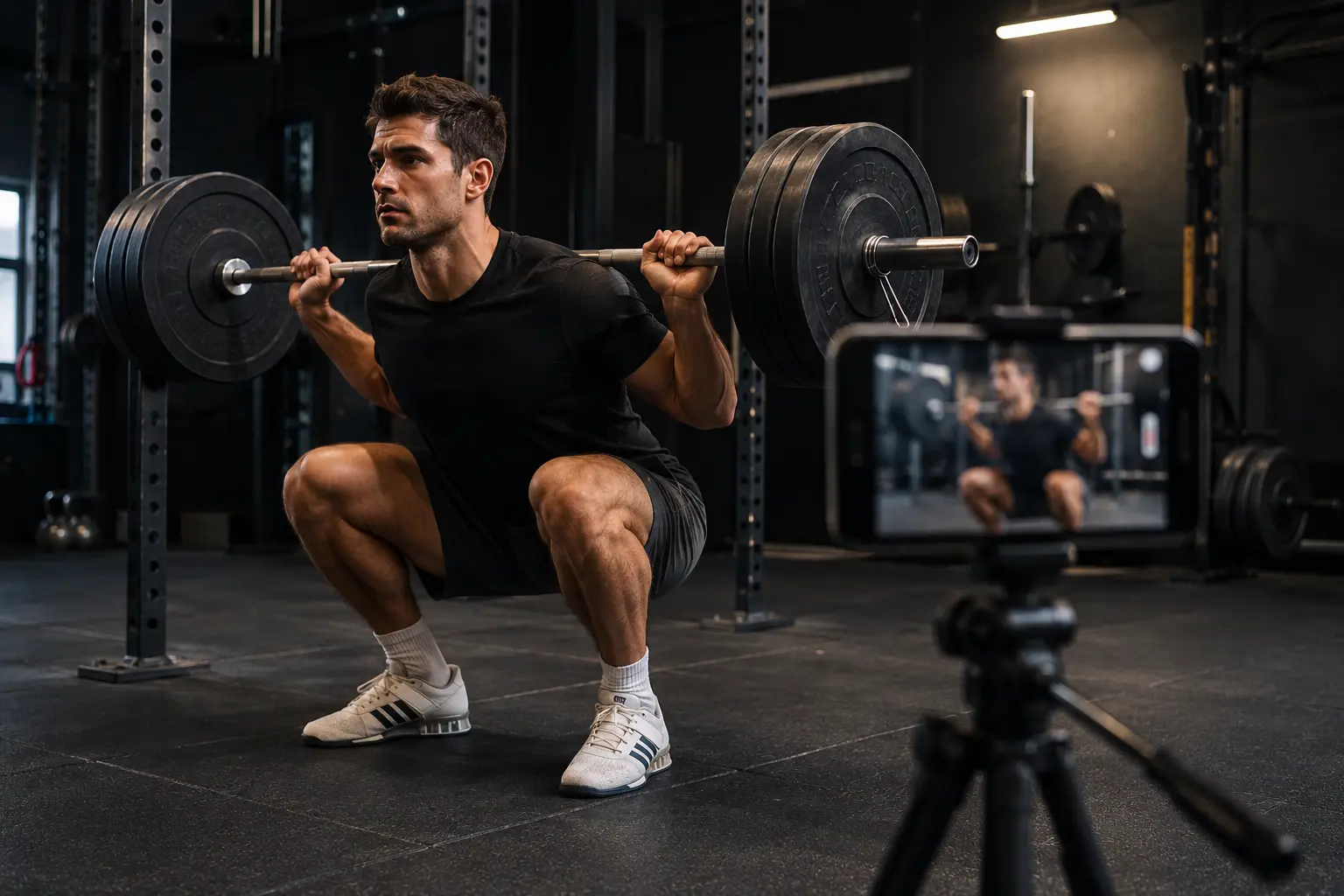
- Occasional video review. Recording a set from the side is the fastest way to catch form breakdown that doesn’t feel obvious from the inside.
Anyone curious about what an actual competition-standard squat requires, meaning the depth and lockout a judge would check for, can see the exact criteria on GymLeague’s official standards.
Common Misconceptions Worth Clearing Up
A few myths keep circulating around squats and calorie burn:
- “Squats are a great fat-burning exercise.” They’re a great strength and muscle-building exercise. The direct calorie burn is modest, and fat loss depends far more on total weekly activity and nutrition than any single exercise choice.
- “More reps always means more benefit.” Beyond a certain point, cranking out extra reps with poor form trains bad habits more than it trains muscle, and the calorie difference from those extra reps is minimal anyway.
- “Fitness trackers give an accurate calorie count for strength training.” Most wearables are built around cardio-based heart rate models and tend to be rough estimates at best for resistance exercises like squats.
- “Weighted squats always burn dramatically more calories than bodyweight ones.” The difference exists but it’s smaller than most people expect, since heavier loads usually come with slower pacing.
The honest takeaway is that 50 squats will not move the needle much on your daily calorie count, and that’s completely fine. The reason to squat isn’t the number on a tracker. It’s what the movement builds over months of consistent, well-executed reps, which shows up in strength, muscle, and long-term metabolic health far more than in any single workout’s calorie total.
Once your squat is dialed in and you’re ready to see how it actually holds up against real competition standards, GymLeague lets you upload a video and get your lift checked for depth and lockout, so you get an honest answer instead of a guess. Submit your squat for verification here.