There’s no single number that works for everyone, and anyone who gives you one flat answer without asking what you’re training for is guessing. The real answer depends on whether you’re squatting for general movement health, trying to build muscle, chasing strength numbers, or just starting out and trying not to get hurt in week one.
Here’s the version you can actually use:
- General fitness or mobility: bodyweight squats can be done daily. Something like 20 to 50 reps spread across the day, in sets of 10 to 15, keeps your hips and knees moving well without any real recovery cost.
- Building muscle: aim for 3 to 5 sets of 8 to 12 reps, done 2 times per week for that muscle group, not necessarily every day.
- Strength or powerlifting: 3 to 5 sets of 3 to 6 heavy reps, 2 to 3 times per week, with full rest days worked into the schedule.
- Beginners: 2 to 4 sets of 8 to 12 reps, 2 to 3 times a week, is plenty while you’re still learning the movement.
That’s the short version. The longer version explains why “how many a day” is actually the wrong frame for anyone training with weight, and why bodyweight squats play by a completely different set of rules than a loaded barbell squat does.
Why “Squats Per Day” Isn’t How Serious Training Actually Works
Ask a strength coach how many squats you should do today, and a good one will ask you a question back: compared to what you did this week?
Daily rep counts sound simple, but they’re the wrong unit of measurement once you’re training with any real intent. What actually drives progress is total weekly volume, meaning the number of hard sets across all your sessions that week, not how many reps happened to land on a Tuesday.
Think of it like this. Ten sets of squats spread across two sessions in a week builds muscle and strength in roughly the same way as ten sets crammed into one brutal daily grind, except the daily version leaves you far more beaten up and far more likely to skip a session because your legs are still fried from yesterday. Research on hypertrophy training generally points to somewhere around 10 to 20 hard sets per muscle group per week as a productive range for most lifters, and that number holds whether you hit it in two sessions or four.
This is why a program built around specific rep and set targets tends to outperform a vague “do squats every day” approach. It’s also why the proper squat form matters more than the raw number you’re chasing. A hundred sloppy reps a day builds bad habits faster than it builds strength.
Bodyweight Squats vs. Weighted Squats — Different Rules
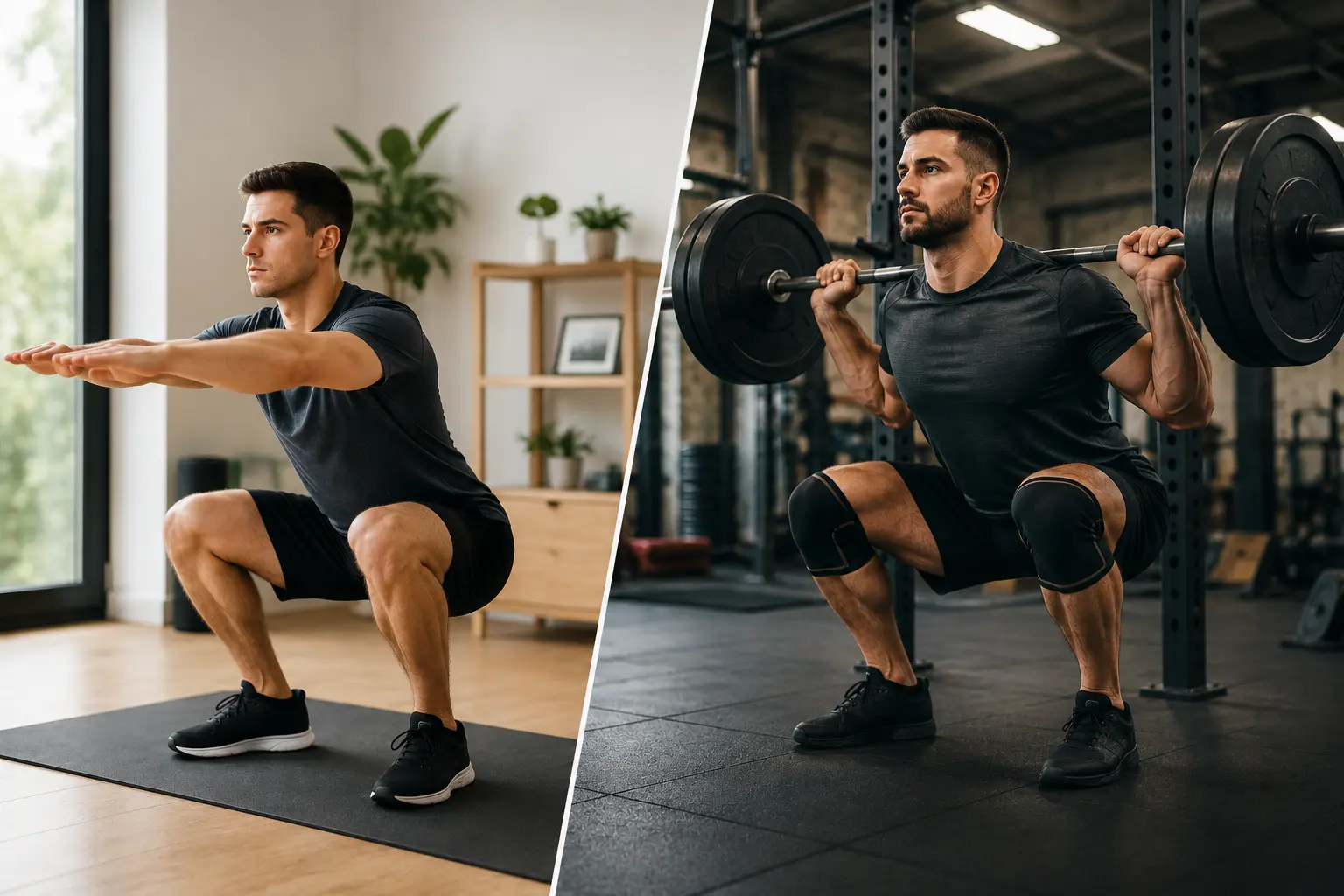
This is the split that most “how many squats a day” questions actually miss. Bodyweight and loaded squats are not the same exercise from a recovery standpoint, even though they look similar.
Can You Really Squat Every Day?
Yes, if you’re talking about bodyweight squats used as a mobility habit. Your hips and ankles benefit from moving through a full range of motion regularly, and a bodyweight squat costs almost nothing in terms of fatigue or joint stress. A lot of physical therapists actually recommend a handful of bodyweight squats scattered through the day for anyone who sits most of the time, just to keep the hips from stiffening up.
Doing this daily won’t build much strength on its own. What it does is keep the pattern sharp and the joints happy, which matters more than people give it credit for. Someone who can drop into a deep, controlled bodyweight squat with no pain has an easier time learning a loaded squat later, because the movement itself already feels familiar.
Why Loaded Squats Need Recovery Windows
A heavy barbell squat is a different story entirely. Once meaningful weight is on the bar, you’re creating real muscle damage and nervous system fatigue, and both of those need time to repair before the next hard session. Most lifters need 48 to 72 hours between demanding squat sessions for that recovery to fully happen.
Squat heavy every single day without that window and a few things tend to show up: bar speed slows down, joints start to ache in a way that isn’t normal training soreness, and total weekly volume ends up lower than if you’d just spread the same work across three or four sessions with rest in between. Chasing a daily habit at the expense of recovery usually backfires within a few weeks.
How Many Squats Per Day, Broken Down by Goal
General Fitness and Everyday Mobility
If your goal is just staying capable and mobile, not chasing a specific strength number, bodyweight squats a few times a day work well. Something like 3 sets of 10 to 15 reps, done once or twice daily, keeps hips, knees, and ankles moving through a healthy range without adding meaningful fatigue.
This is closer to a movement snack than a workout. It’s not going to build serious muscle, but that’s not the point here.
Building Muscle (Hypertrophy)
Muscle growth responds to total weekly volume more than daily frequency. A practical target is 3 to 5 sets of 8 to 12 reps per session, trained twice a week for the legs. That lands you somewhere around 6 to 10 working sets weekly just from squats, which fits comfortably inside the broader 10 to 20 set range research generally supports for a muscle group, once you account for other leg exercises in the same week.
Going heavier on daily frequency doesn’t necessarily speed this up. Muscle needs a stimulus, then time to actually rebuild, and cramming that stimulus in daily without adequate protein and sleep tends to blunt the results rather than accelerate them.
Strength and Powerlifting Numbers
Anyone training for a heavier squat, especially with competition in mind, needs lower reps and heavier loads. A common structure is 3 to 5 sets of 3 to 6 reps, 2 to 3 times per week, with the heaviest day followed by at least one full rest day before the next squat session.
This is also where understanding the actual squat depth standard used in competition judging matters. A heavy squat that doesn’t hit proper depth doesn’t count toward anything, no matter how much weight was on the bar, so training volume needs to be built around reps that would actually pass judging, not reps that look heavy but cut the range short.
Beginners Just Starting Out
New lifters don’t need much volume to see progress. 2 to 4 sets of 8 to 12 reps, 2 to 3 times a week, is enough to build both strength and technique in the first few months. Beginners typically respond to almost any reasonable amount of squatting, since the nervous system and muscles are adapting to a brand-new stimulus.
The mistake most beginners make isn’t doing too few squats. It’s loading weight onto the bar before the movement pattern is clean, which tends to bake in form errors that take much longer to fix later than they would have taken to avoid in the first place.
A Sample Weekly Squat Volume Breakdown
Here’s roughly how weekly squat volume tends to look across different goals:
- Mobility only: daily bodyweight squats, 20-50 reps spread across sets, no added load
- General fitness: 2-3 sessions per week, 2-3 sets of 10-15 reps each
- Muscle building: 2 sessions per week, 3-5 sets of 8-12 reps each
- Strength/powerlifting: 2-3 sessions per week, 3-5 sets of 3-6 reps each, with one heavier day and one lighter technique day
- Beginner: 2-3 sessions per week, 2-4 sets of 8-12 reps each
Notice none of these are framed around a daily number. Weekly structure is what actually determines results, and daily counts are really just how that weekly total gets divided up.
Signs You’re Squatting Too Much
A few warning signs tend to show up before anything gets seriously wrong:
- Joint pain that lingers, especially in the knees or lower back, rather than normal muscle soreness that fades in a day or two
- Bar speed slowing down across sessions even though the weight hasn’t changed
- Form breaking down earlier in the set than it used to, like knees caving or depth getting shallower under the same load
- Persistent fatigue that doesn’t improve with a normal night’s sleep
- Motivation dropping specifically around squat day, which is sometimes the body’s way of signaling it needs a break before the mind consciously registers why
Any one of these on its own isn’t a huge deal. A few showing up together, over more than a week, usually means volume or frequency needs to come down, not up.
Signs You’re Not Doing Enough
The opposite pattern is just as common, especially among people who squat casually without much structure:
- No progress in weight or reps over several weeks despite showing up consistently
- Sessions that never feel challenging, where the last rep of every set feels the same as the first
- No soreness ever, even after a break from training, which often means the working sets aren’t demanding enough to drive adaptation
- Skipping squats regularly in favor of machines or accessory work that feels easier to complete
If squat day consistently feels like a warm-up rather than a workout, volume, load, or both probably need to increase.
How to Progress Your Squat Volume Without Guessing
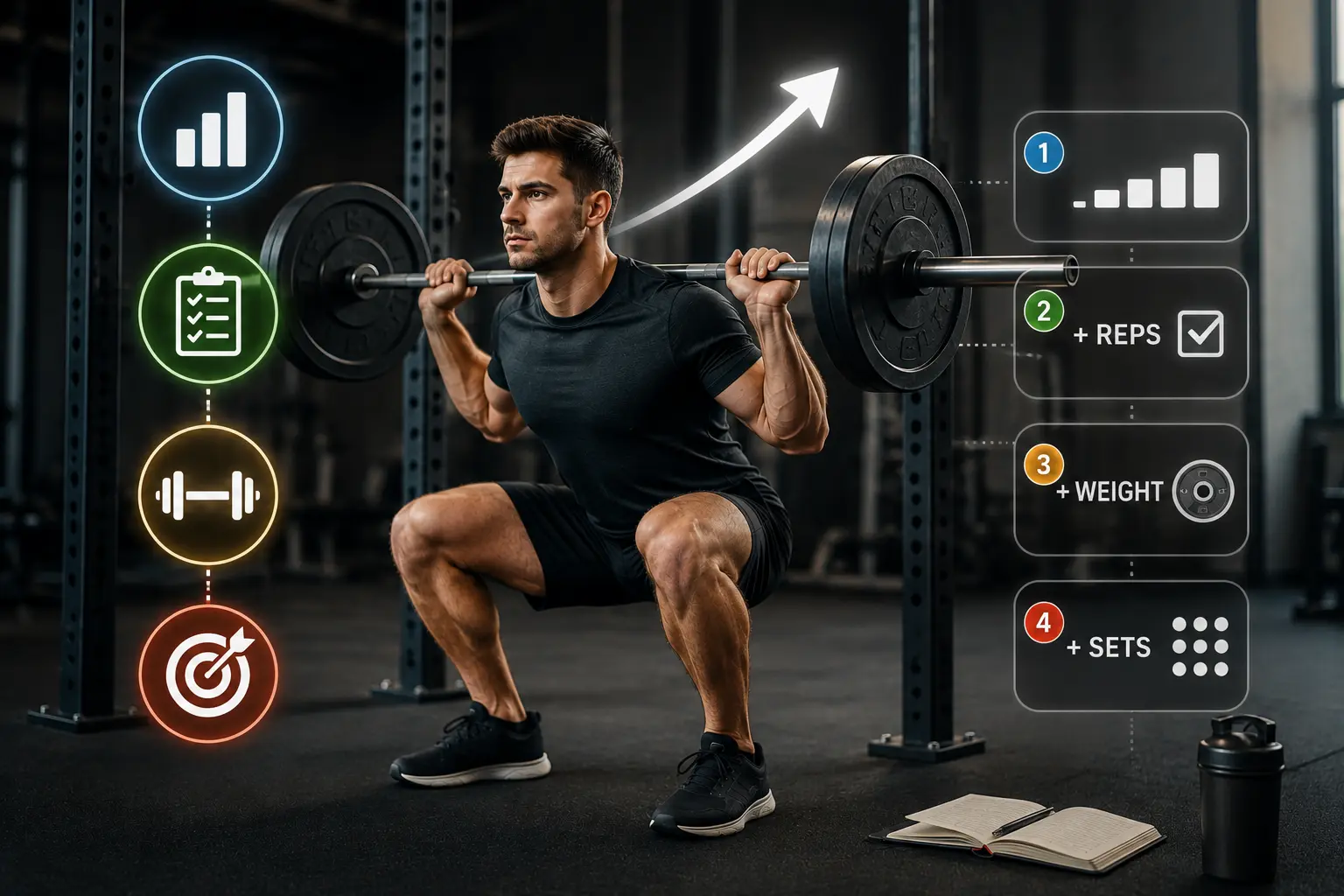
Progressing squat volume works best as a slow, deliberate process rather than a leap from one extreme to another.
Start by tracking what you’re actually doing now, sets, reps, and weight, for two or three weeks before changing anything. A lot of people assume they know their training volume and are surprised once it’s written down.
From there, small increases work better than big jumps. Adding one extra set to a session, or a small amount of weight, gives the body a chance to adapt without overwhelming recovery. This is a similar approach to what’s outlined for anyone learning to structure a full training week around all three main lifts, not just squats in isolation.
Filming your squats periodically also helps track whether added volume is coming at the cost of form. It’s easy to convince yourself reps still look clean when fatigue sets in near the end of a set. A short video from the side settles that argument quickly.
Common Mistakes People Make Chasing a Squat Number
A handful of patterns show up again and again with people fixated on hitting a specific daily squat count:
- Prioritizing rep count over depth and control. A hundred shallow squats build far less than fifty full-depth ones.
- Squatting heavy every day without rest. This tends to stall progress rather than speed it up, since the body never fully recovers between sessions.
- Ignoring how squats fit into the bigger picture. Squats are one piece of a bigger system that includes the bench press and deadlift, and overloading one lift while neglecting recovery for the others usually backfires across the whole program.
- Comparing daily totals to someone else’s routine without accounting for different goals, training age, or recovery capacity.
- Never testing whether the number is actually working, meaning tracking weight and reps over time instead of just doing the same routine indefinitely and assuming it’s effective.
The honest takeaway is that there’s no universal squat number waiting to be discovered. What matters is picking a target that matches your actual goal, tracking it honestly over weeks rather than days, and adjusting based on how your body responds rather than a figure pulled from somewhere online.
If you want to see how your squat actually measures up once you’ve built consistent volume, GymLeague lets you upload a video of your lift and get it checked against official depth and lockout standards, so you know exactly where you stand instead of guessing. Submit your squat for verification here.