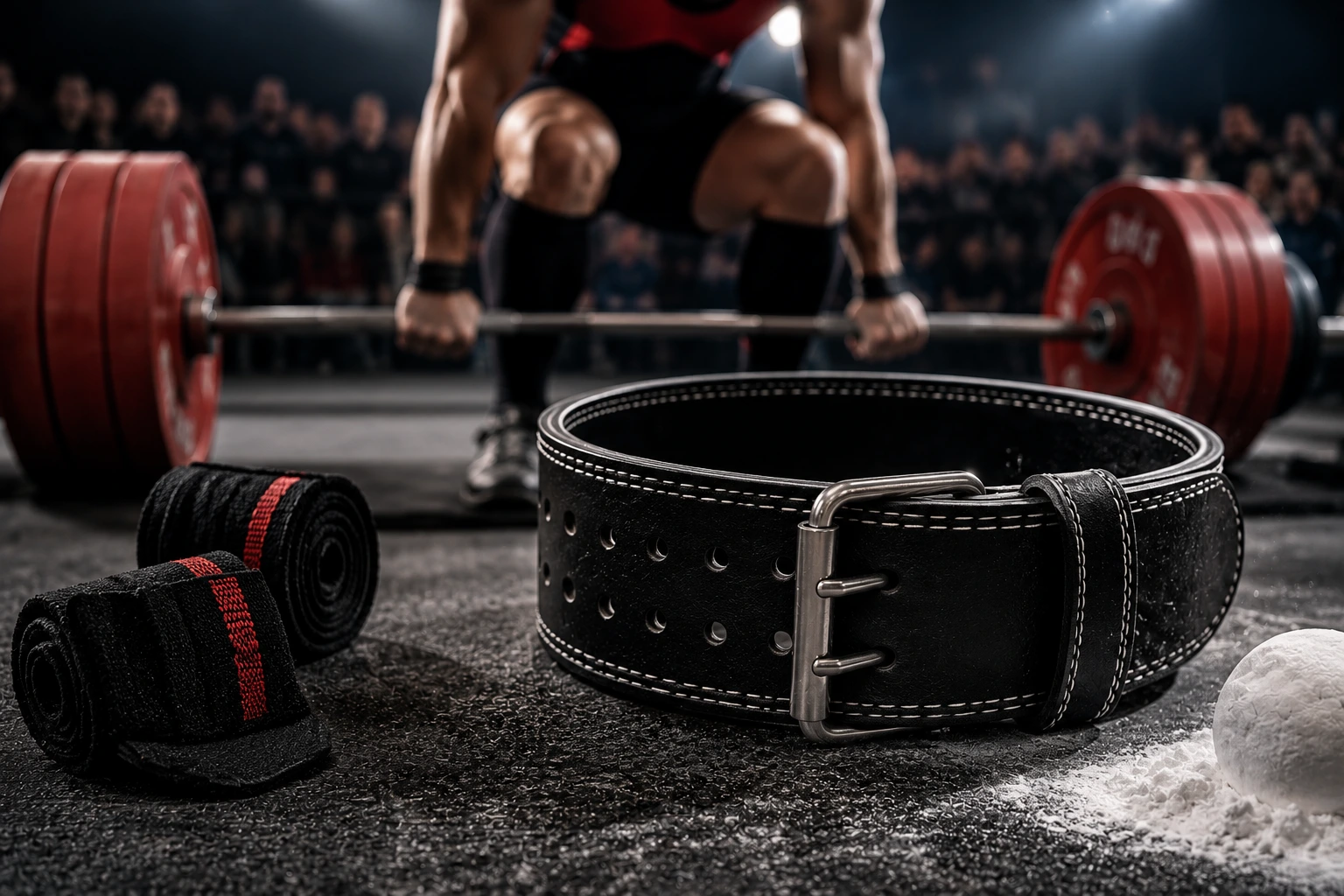
Yes, belts are allowed in powerlifting. Every major federation permits them, in both raw and equipped divisions, and most lifters who compete seriously end up owning one within their first year of training.
That’s the short answer. The part that actually trips people up is everything after it. Not every belt sitting on a gym shelf is competition-legal. Width, thickness, material, and even how the belt fastens are all regulated, and the rules aren’t identical across federations. A lifter who shows up to their first meet with a Velcro gym belt they’ve used for two years might find it rejected at equipment check, five minutes before their first attempt.
This article walks through what’s actually allowed, why belts are permitted at all in “raw” lifting, how the major federations differ on the details, the physical mechanism behind why a belt helps, and the mistakes that quietly cost lifters pounds on the platform. By the end, you should know exactly what belt to buy, how to wear it, and when it actually matters.
The Quick Answer: Belts Are Legal, But Read the Fine Print
Here’s the short version before we get into the details:
- Lifting belts are permitted in raw and equipped divisions across essentially every recognized powerlifting federation.
- Belts must generally be a single, unmodified layer of leather or an approved synthetic material.
- The maximum width allowed is almost always 10cm (4 inches).
- A belt cannot be attached to clothing, a singlet, or any other piece of gear.
- Wrist wraps and knee sleeves are usually permitted alongside a belt. Suits and bench shirts are not, unless you’re competing in an equipped division built specifically for them.
If you remember nothing else from this article, remember that last point. Belt legality is rarely the confusing part. It’s the confusion between “raw” and “supportive gear that’s actually allowed in raw” that catches new competitors off guard.
Read Also: What Is Powerlifting?
Why Belts Are Allowed in Raw Powerlifting
The Raw vs Equipped Distinction
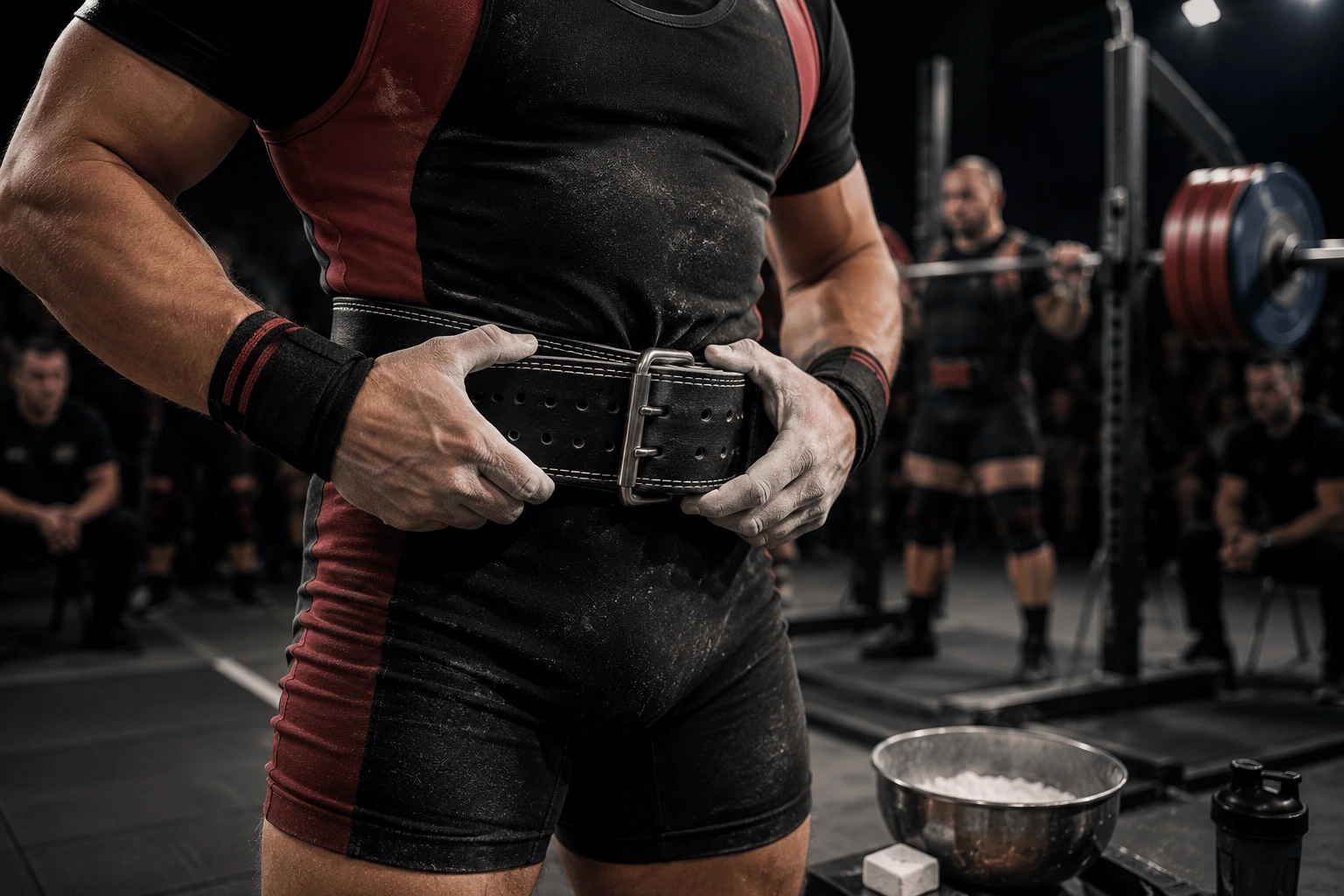
A lot of newer lifters assume “raw” means no equipment at all, just a singlet and chalk. That’s not quite right.
Raw lifting means competing without gear that adds force back into the lift. A squat suit or bench shirt is built from dense, low-stretch material that compresses on the way down and springs back on the way up, literally assisting the bar’s movement. That’s the line federations draw.
A belt doesn’t do that. It doesn’t compress and rebound. It gives your torso something rigid to brace against, which changes how well you can stabilize your spine under load, but it doesn’t push the bar anywhere. That distinction is exactly why belts have stayed legal in raw divisions for decades while suits and shirts got pushed into their own equipped category.
What “Raw” Actually Means for Equipment
Most raw-legal gear falls into a fairly short list:
- Lifting belt
- Knee sleeves (knee wraps are a different story and usually banned in raw)
- Wrist wraps
- Chalk
- Federation-approved singlet or lifting attire
Raw is a category that allows a specific, limited set of support gear. It isn’t the absence of support. That’s a useful way to think about it if you’re new to competing and unsure what belongs in your gear bag and what stays home.
Federation Comparison: How Belt Rules Actually Differ
This is where things get specific, and where a lot of lifters get caught off guard. Belt rules aren’t universal.
International Powerlifting Federation (IPF):
- Maximum width of 10cm
- Approved materials and buckle types are strictly defined
- Belts are checked at weigh-in, not just glanced at on the platform
USA Powerlifting (USAPL):
- Follows IPF technical standards closely, since USAPL is the IPF’s American affiliate
- Belt must be a single thickness of material, with no hidden internal stiffening layer
USPA:
- Slightly more permissive on belt styles and manufacturers
- Still enforces the general width cap and single-layer construction rule
Independent and online verification platforms:
- Many newer platforms that verify lifts through submitted video rather than in-person meets follow the same general raw-lifting logic
- Belts, wrist wraps, and knee sleeves are typically allowed
- Suits, bench shirts, and anything that mechanically assists the lift are typically excluded
The takeaway here isn’t complicated, but it’s easy to skip: a belt that passed equipment check at one meet isn’t automatically legal at another. If you’re switching federations, or lifting somewhere new, check the specific rulebook before you check your ego.
What Else Is Typically Allowed Alongside a Belt
Since a belt rarely does its job in isolation, it helps to know what else usually sits in a raw lifter’s approved equipment list. Across most rulebooks, this list looks remarkably similar:
- Standard or calibrated barbells and plates
- Lifting belt
- Wrist wraps
- Knee sleeves
And on the other side, the gear that’s consistently excluded from raw categories:
- Lifting suits
- Bench shirts
- Squat suits
- Any form of mechanical assistance
If you’re building a gear bag for your first meet, this short list covers almost everything you actually need. Anything beyond it is either sport-specific accessory gear, like chalk or a weightlifting singlet, or it belongs in an equipped category you’re not competing in.
Types of Powerlifting Belts and Which Ones Are Competition-Legal
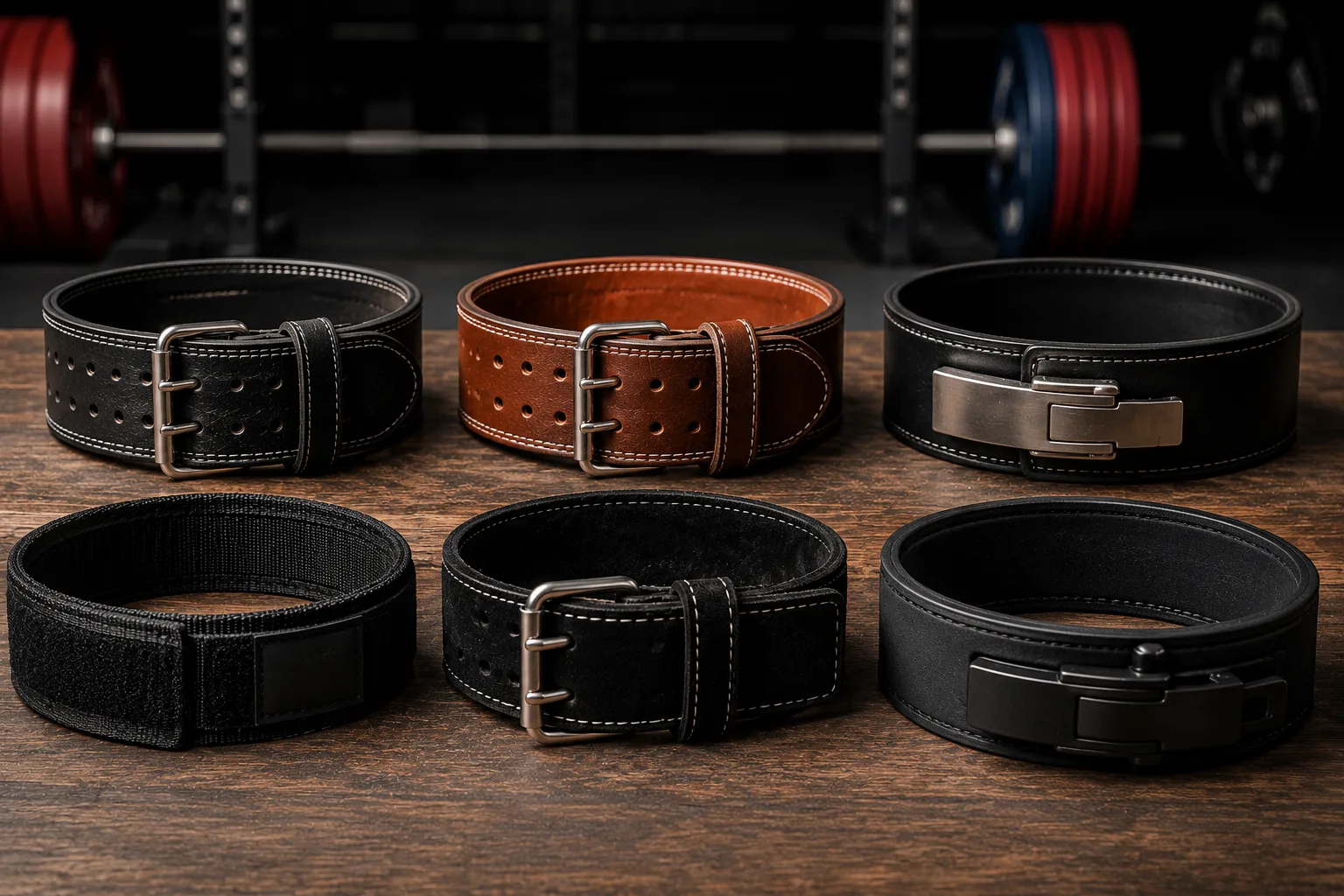
Not all belts are built the same, and not all of them are treated the same by judges.
Single-Prong Buckle Belts
This is the traditional style, and it’s the one most widely accepted across every federation without question.
- Simple, durable, and inexpensive to replace
- Slower to tighten and loosen between attempts
- The default choice for most first-time competitors
Double-Prong Buckle Belts
A slightly more secure hold than single-prong, and still standard across most rulebooks.
- Common among older-school lifters who prefer the extra tension
- Functionally similar to single-prong in terms of legality
Lever Belts
Popular for how quickly they go on and off, especially useful when you’re cutting it close on the clock between attempts.
- Fastest option to put on under pressure
- Some federations have specific rules about lever placement and belt thickness, so it’s worth double-checking before a meet rather than assuming it passes
Velcro Belts
Common in gyms, and often the first belt people ever own for training.
- Frequently not allowed in competition, because thickness and stiffness are hard to standardize and verify
- A good example of a belt that works fine for training but fails equipment check on meet day
If you’ve been training in a Velcro belt for months and you’re planning your first competition, this is the one substitution worth making early. Don’t wait until the week of your meet to find out it won’t pass inspection.
How a Powerlifting Belt Actually Works
Intra-Abdominal Pressure, Explained Simply
A belt doesn’t lift the weight for you. What it does is give your core something rigid to push against.
When you brace properly before a heavy squat or deadlift, you’re pressurizing your abdomen, almost like inflating a balloon inside your torso. That pressure stiffens your spine and makes your entire trunk act like a solid column instead of a floppy stack of vertebrae. A belt gives you a surface to brace against, which lets you generate more of that pressure than bracing into open air alone.
Research in strength and conditioning literature has consistently found that wearing a belt increases intra-abdominal pressure during heavy lifts, which is generally associated with reduced spinal compression forces under load. That’s the actual mechanism, and it’s worth understanding because it explains both why belts help and why they’re not magic.
What a Belt Does NOT Do
A few things worth clearing up, since misunderstanding this is where a lot of bad habits start:
- It does not replace proper bracing technique. If you don’t know how to brace without a belt, putting one on won’t fix that.
- It does not prevent injury by itself. It changes the mechanics of a brace, it doesn’t guarantee safety.
- It does not add force to the bar the way a squat suit or bench shirt does. The bar still has to be moved entirely by you.
A common observation among coaches: lifters who buy a belt expecting instant stability, without ever learning to brace unbelted first, often end up with a weaker core relative to their lift numbers. The belt becomes a crutch instead of a tool.
Read Also: How to Start Powerlifting
Common Mistakes Lifters Make With Belts
This is where a lot of avoidable pounds get left on the platform, or where good lifters get flagged for something that had nothing to do with their strength.
- Wearing it too loose. A belt that isn’t snug enough gives you nothing to brace against, which defeats the entire purpose of wearing one.
- Positioning it in the wrong spot. It should sit around your natural waist, roughly in line with your navel, not up near your ribs or down around your hips.
- Relying on the belt before learning to brace without one. Build the skill first, then add the tool.
- Buying the wrong width or thickness for your federation. Check the rulebook before you buy, not after you’ve already ordered one online.
- Wearing a belt for every single warmup set. Most coaches recommend introducing it around 80 to 85 percent of your working weight, not from the first empty-bar rep.
When Should You Actually Wear a Belt? Training vs Competition
Percentage-Based Guidelines
A common approach among coaches is to save the belt for the heavier percentage of a session, typically somewhere around 80 to 85 percent of your one-rep max. Lighter sets are a good opportunity to reinforce your natural bracing pattern without the added support, which keeps that skill sharp for the rare moment your belt breaks, slips, or simply isn’t allowed.
Squat and Deadlift vs Bench Press
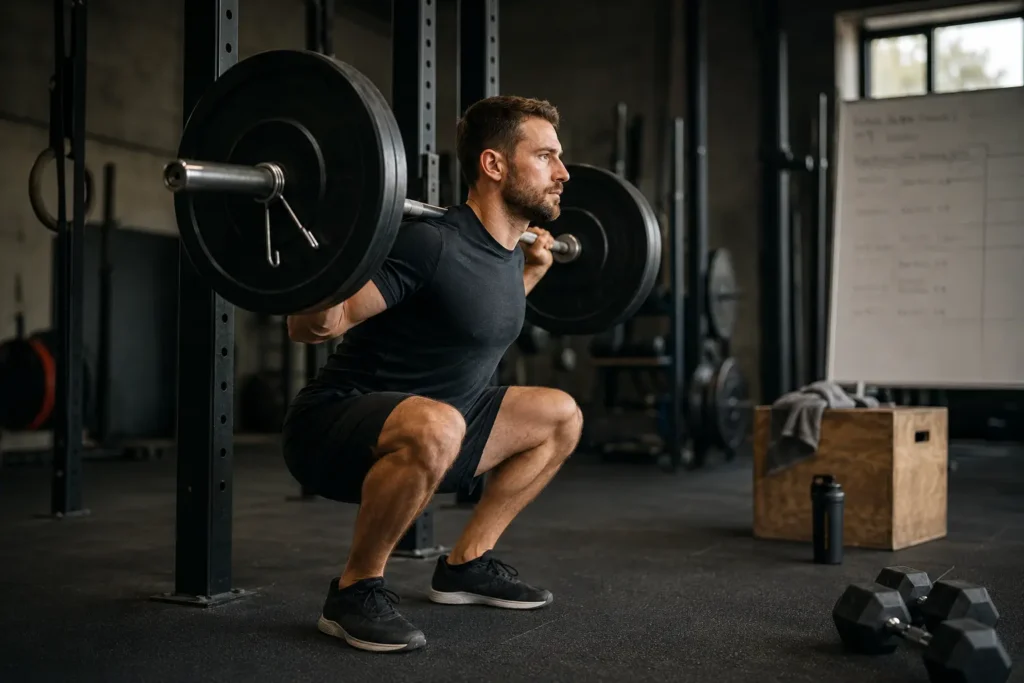
Belts matter most on the squat and deadlift, since both lifts load the spine directly and benefit heavily from increased intra-abdominal pressure.
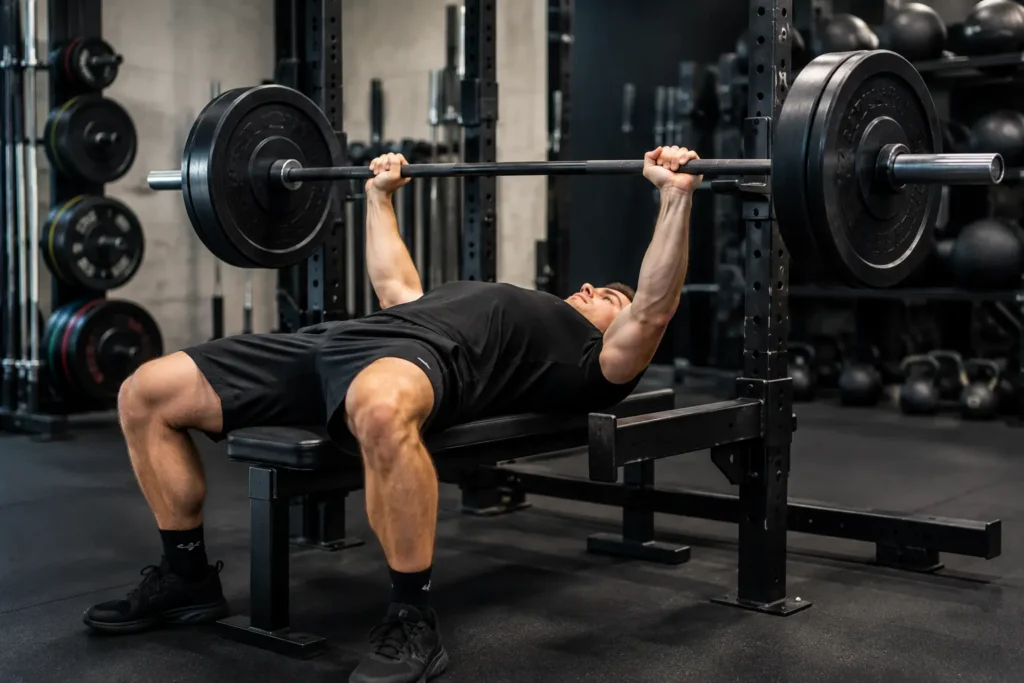
Bench press is a little different. The belt isn’t doing much for pressure bracing while you’re lying down. Instead, it’s more about giving you a stable, consistent position to arch and push against. Lifters sometimes assume the belt does the same job on all three lifts, and it doesn’t quite work that way.
How to Choose the Right Belt for Competition
Sizing
Measure at the point where the belt will actually sit on your body, not by your regular pant size. A belt that’s even slightly too large won’t create the pressure you need, no matter how good the material is.
Material: Leather vs Nylon
Leather belts are stiffer and give better pressure feedback, which is why they’re the standard choice for most competitive lifters. Nylon and Velcro belts are more common in general training, but they often lack the rigidity that competition rules are built around, and that’s exactly why they tend to get rejected at equipment checks.
Checking Rules Before You Buy
This is the step people skip, and it’s the cheapest mistake to avoid. Before you spend money on a belt, check the specific rulebook of the federation or platform you’re competing on. Five minutes reading through it can save you from showing up with gear that doesn’t qualify.
Belt or No Belt? The Ongoing Debate Among Lifters
This isn’t a settled argument, and any coach who tells you it is hasn’t spent much time around different training philosophies.
The case for belts:
- More consistent bracing on heavy attempts
- Reduced perceived spinal stress under maximal loads
- A tool that’s legal, cheap, and proven to work when used correctly
The case for training beltless more often:
- Forces the core to develop bracing strength on its own
- Can expose weaknesses in technique before they become a problem under a heavier bar
- Some coaches worry that early or constant belt use masks poor bracing habits rather than fixing them
Most experienced lifters land somewhere in the middle. Train beltless for a good portion of your programming to build genuine core strength, then bring the belt in for your heaviest sets and for competition, where every bit of stability matters.
Practical Checklist Before You Compete With a Belt
- Confirm your belt’s width and thickness actually match the rules of the federation or platform you’re lifting on.
- Bring your belt to equipment check before your warmups start, not after.
- Practice your bracing pattern in training long before competition day, so it’s second nature under the bar.
- Know exactly when in your warmup sequence you’ll actually put the belt on, so it isn’t a last-minute scramble.
Belts are simple pieces of equipment, but the details around them aren’t trivial. Get the width right, get the timing right, and get your bracing technique solid before you ever rely on one, and it becomes exactly what it’s supposed to be: a tool that helps you lift what you’re already capable of lifting, safely and consistently.
If you’re training toward your first competition and want to see exactly how your squat, bench, and deadlift measure up against verified standards, GymLeague lets you submit your lifts on video for official verification and get ranked against other lifters. You can review the full equipment and lift standards before you film your next attempt, or check the squat, bench press, and deadlift requirements to make sure your belt use lines up with a valid rep.
FAQs
Not necessarily. Beginners should first focus on learning proper lifting technique and bracing without a belt. As training weights become heavier, a lifting belt can provide additional support and improve stability during squats and deadlifts.
A lifting belt doesn’t increase your strength directly. It helps you create better intra-abdominal pressure and maintain a more stable torso during heavy lifts, which may improve lifting performance when used correctly.
Yes. Wearing a belt is optional in powerlifting. Many lifters compete successfully without one, although most experienced competitors choose to use a belt during heavier attempts for additional support.
A powerlifting belt should be tight enough to allow you to brace your core against it without restricting your ability to take a deep breath. It should feel secure but not so tight that it affects your breathing or lifting technique.
Both styles are competition legal in many federations. Lever belts are faster to tighten and loosen, while prong belts offer more flexibility for adjusting the fit. The best choice depends on personal preference rather than performance.
Most lifters only wear a belt during heavy compound lifts such as squats and deadlifts. For lighter exercises and accessory movements, training without a belt can help develop natural core stability and bracing skills.
Powerlifting belts are usually the same width all the way around to provide consistent support during heavy lifts. Olympic weightlifting belts often have a tapered front, allowing greater mobility during movements like the snatch and clean and jerk.
A quality leather powerlifting belt can last for many years with proper care. Many competitive lifters use the same belt throughout their lifting career, making it a worthwhile long-term investment.
A lifting belt is designed to improve stability and support during heavy lifts, but it cannot prevent injuries on its own. Proper technique, progressive training, and adequate recovery remain the most important factors for reducing injury risk.
Before competing, check your federation’s equipment regulations for requirements such as belt width, thickness, material, and fastening system. If you’re unsure, review the official rulebook or contact the event organizer before competition day.
Ready to Lift With Confidence?
Choosing the right belt is only part of the equation. Proper technique, correct equipment, and meeting competition standards all play a role in a successful lift.
With GymLeague, you can submit videos of your squat, bench press, and deadlift for verification against official lifting standards. Review the equipment requirements, check that your lifts meet competition rules, and track your progress as you prepare for your next personal best or first powerlifting meet.
Create your free GymLeague account, upload your first lift, and see how you measure up.