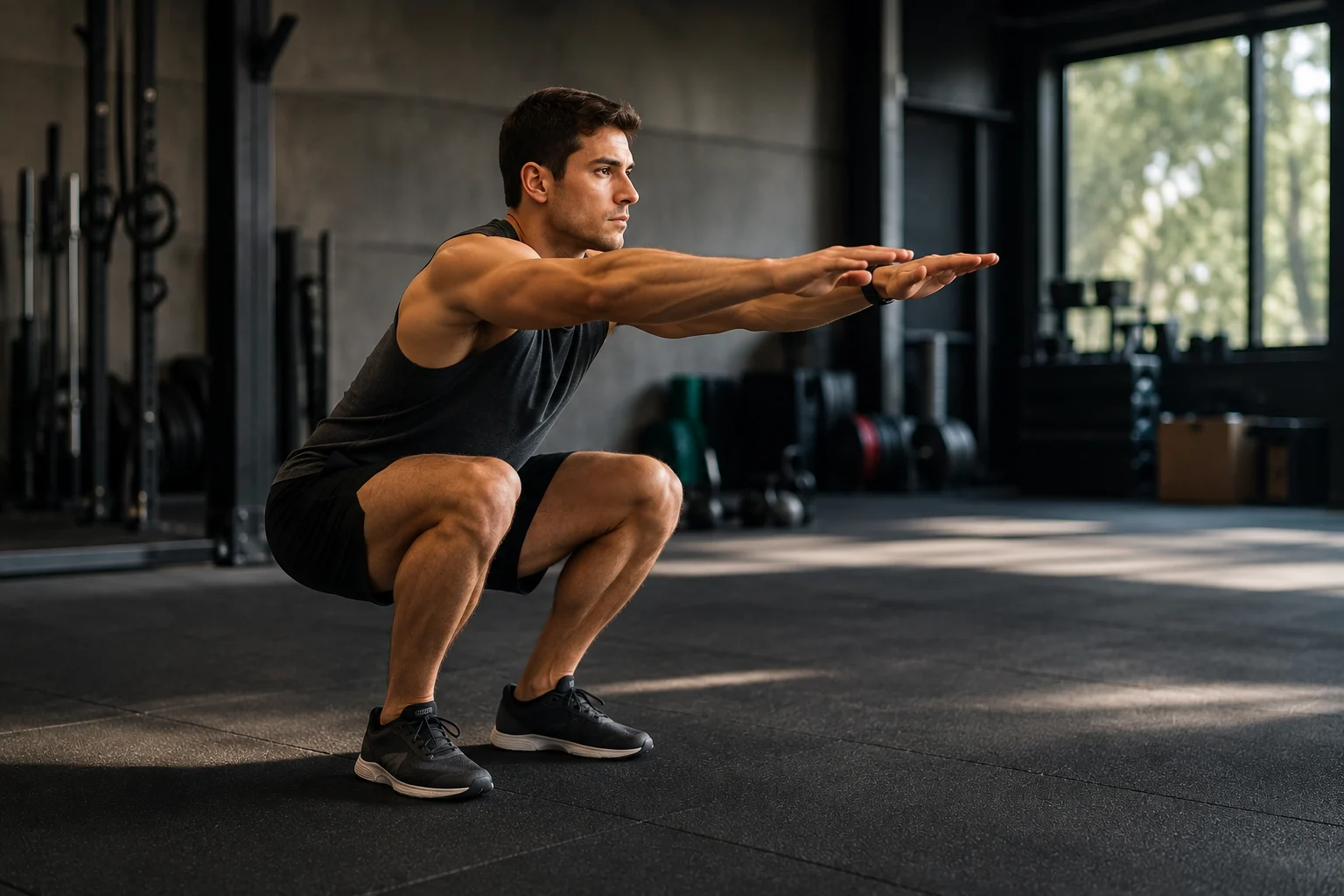
Squats build lower body strength, train your quads, glutes, hamstrings, and core at the same time, improve joint durability when done with proper form, and carry over directly into everyday movements like standing up, climbing stairs, and carrying heavy loads. That’s the short answer. If you’ve ever wondered why nearly every strength coach, physical therapist, and competitive lifter treats the squat as close to non-negotiable, the reasons go a lot deeper than “it works your legs.”
I’ve coached lifters who came in convinced squats were bad for their knees, and I’ve coached lifters who squatted three times a week for years without a single issue. The difference almost never comes down to the exercise itself. It comes down to how it’s loaded, how often it’s programmed, and whether the person actually knows what they’re doing under the bar. Let’s get into what the squat actually does for your body, where it falls short, and how to know if you’re doing it right.
What Muscles Do Squats Actually Work?
A squat is what trainers call a compound movement, meaning it recruits multiple muscle groups and joints at once instead of isolating a single body part.
The primary movers are:
- Quadriceps – the muscles on the front of your thigh, responsible for extending the knee
- Glutes – your biggest and most powerful muscle group, driving hip extension
- Hamstrings – working alongside the glutes, especially as you descend and control the movement
Beyond the legs, squats pull in a long list of supporting muscles:
- Core and abdominals – bracing to keep your spine stable under load
- Erector spinae (lower back) – maintaining a neutral spine through the whole rep
- Calves and ankle stabilizers – controlling balance through the foot
- Hip adductors – stabilizing the knees as you move through depth
Compare that to a leg extension machine, which isolates the quads and does almost nothing else. A squat asks your whole body to work as a unit. That’s part of why it’s considered more useful for real strength than most single-joint exercises, and why getting your proper squat form dialed in matters so much before you start adding weight. Bad mechanics under a machine mostly just limit your results. Bad mechanics under a loaded barbell can actually hurt you.
Why Working Multiple Muscles at Once Matters
There’s a practical argument here that goes beyond “more muscles is better.” Training several muscle groups together in one movement is simply more time-efficient than chasing the same result through five isolation exercises. But the bigger reason is carryover. Strength built through a compound pattern tends to transfer to real-world tasks far better than strength built on a machine that locks your joints into a fixed path.
I’ve watched lifters who trained almost exclusively on machines struggle to pick a heavy box off the floor or move furniture without straining something. Their muscles were strong in isolation, but they’d never trained the coordination piece, the part where your whole body has to brace, stabilize, and move together under an unpredictable load. Squats build that coordination as a side effect of just doing the movement correctly.
Strength Benefits of Squatting Regularly
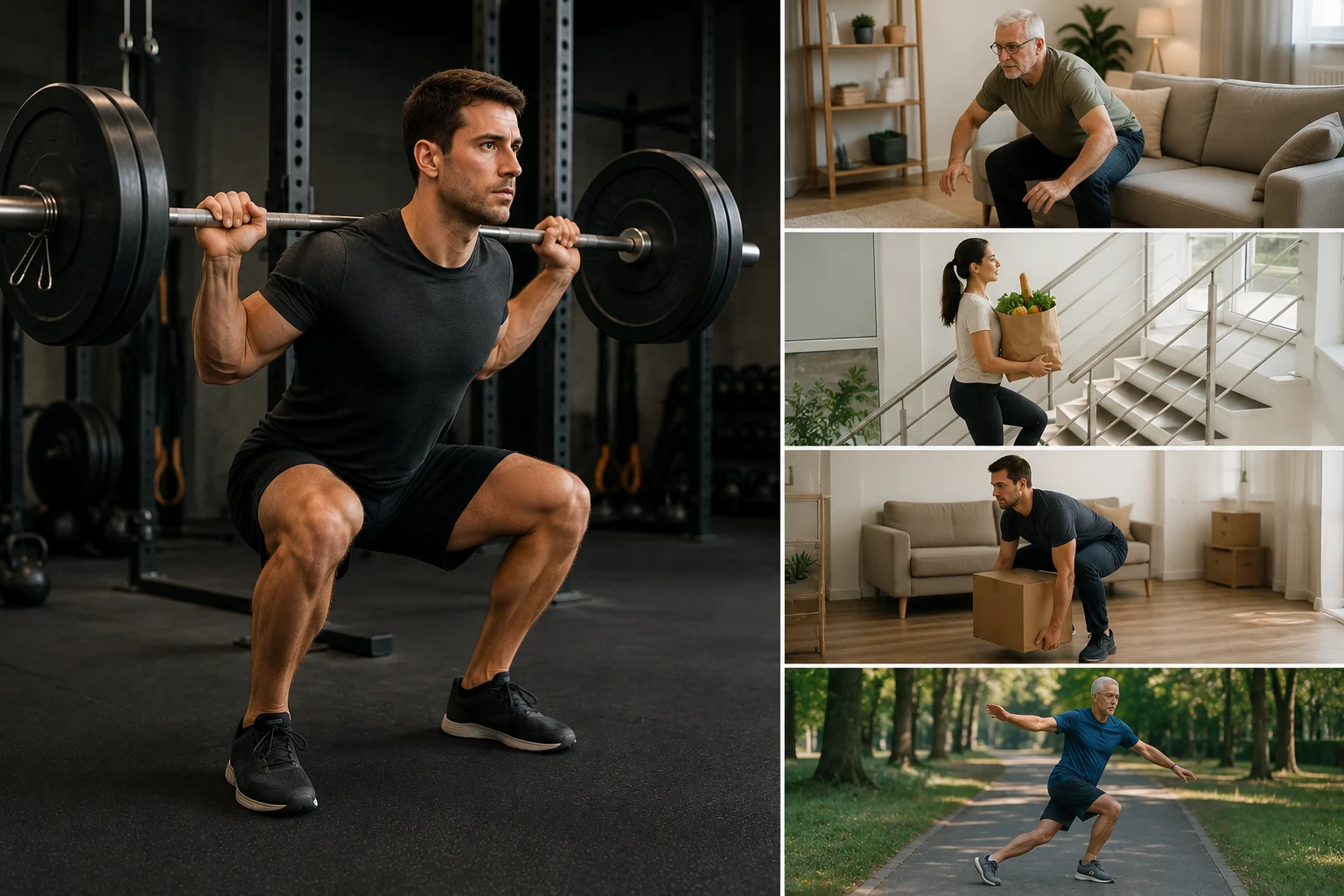
Lower body strength isn’t just a gym metric. It’s the foundation for almost every athletic movement and a huge chunk of daily physical tasks most people don’t think about until they can’t do them anymore.
Squatting with progressive overload, meaning you gradually add weight, reps, or volume over time, is one of the most reliable ways to build that strength. There’s nothing fancy about the principle. Your muscles adapt to the demand placed on them, so if you keep asking a bit more of them week to week, they get stronger. What makes the squat particularly effective is that it lets you overload the entire lower body at once, rather than one muscle at a time.
Squats and Functional Strength for Daily Life
This is the part that gets overlooked in a lot of fitness content, but it’s arguably the most relevant benefit for the average person.
- Standing up from a low chair or the floor
- Carrying groceries or a child up a flight of stairs
- Lifting a heavy box without throwing your back out
- Catching your balance if you trip
All of these rely on the same movement pattern and muscle recruitment as a squat. This is why physical therapists often prescribe squat-pattern exercises for older adults, not to build a competition total, but to preserve the ability to get up off the floor unassisted. Strength and conditioning research has repeatedly pointed to lower-body strength as one of the better predictors of independence and fall risk in older populations. You don’t need to squat heavy to get this benefit. You need to squat consistently, with a range of motion that actually challenges your muscles.
Squats and Athletic Performance
If you watch how sports teams train, squats show up almost everywhere, from soccer and basketball to sprinting and rugby. That’s not a coincidence.
Sprinting, jumping, and changing direction quickly all depend heavily on the posterior chain, the glutes and hamstrings, and on the ability to generate force fast. Squats train exactly that. Coaches program them as a foundational lift because the strength gained transfers into explosive power on the field or court, even though a squat itself looks nothing like a sprint or a jump.
There’s a concept in strength training called rate of force development, essentially how quickly you can produce force. Heavy squatting builds the raw strength base, and then that strength gets translated into speed through more explosive variations like jump squats or Olympic lift derivatives. Most athletic programs use squats as the base layer everything else is built on top of.
Squats in Powerlifting Specifically
For competitive lifters, the squat isn’t just a training tool. It’s one of three lifts that make up the sport itself, alongside the bench press and deadlift.
What separates a competition squat from a casual gym squat is the depth requirement. A lift only counts if the hip crease drops below the top of the knee at the bottom of the movement. This isn’t an arbitrary rule. It exists to standardize the movement so every lifter is judged against the same bar, literally and figuratively. A high, partial squat with the same weight on the bar is a fundamentally different, easier movement than a full-depth squat, and letting lifters cut depth would make the whole competition meaningless.
Platforms that verify lifts, GymLeague included, judge squats against this official squat depth standard, checking the hip-to-knee relationship from a side angle before a lift is counted. If you’re training toward a real number you want to stand behind, training to that same depth standard from day one saves you from a rude surprise later.
Hormonal and Metabolic Benefits
Compound lifts like squats trigger a bigger acute hormonal response than isolation exercises. Heavy, multi-joint movements that recruit large amounts of muscle mass tend to produce a stronger short-term spike in hormones like testosterone and growth hormone compared to something like a bicep curl. This doesn’t mean one heavy squat session will transform your physique overnight, but it does mean squats are working harder for you per set than a lot of alternatives.
There’s also a metabolic angle worth mentioning honestly, without overselling it. Heavy compound lifting creates what’s sometimes called an afterburn effect, where your body continues burning calories at an elevated rate for a period after the workout as it recovers. It’s a real effect, but it’s modest, not a replacement for cardio if fat loss is your primary goal.
The bigger long-term metabolic benefit is more straightforward: building muscle mass raises your resting metabolic rate. Since squats are one of the most effective tools for building lower-body muscle, and your legs make up a large percentage of your total muscle mass, regular squatting contributes meaningfully to that effect over months and years, not overnight.
Joint Health, Mobility, and Injury Prevention
For a long time, there was a persistent myth that squatting was hard on the knees, something to avoid rather than train. Research on this has moved in the opposite direction. Done with proper form and appropriate loading, squats strengthen the connective tissue around the knee joint rather than wearing it down. The knee, like any joint, adapts to the stress placed on it when that stress is applied gradually and with sound technique.
Squats also build mobility in the hips and ankles as a byproduct of the movement pattern, especially when you’re training through a full range of motion. And because the exercise demands core bracing throughout, regular squatting tends to build lower back resilience alongside leg strength, not instead of it.
None of this means squats are risk-free. Like any loaded exercise, the risk comes from execution, not the movement itself.
Common Mistakes That Turn a Good Exercise Bad
- Not hitting depth. Cutting the range of motion short reduces the training benefit and can create uneven stress on the joints. Fix: work on ankle and hip mobility until you can comfortably hit at least parallel.
- Knees caving inward. Known as valgus collapse, this puts unwanted stress on the knee ligaments. Fix: actively push the knees out in line with your toes throughout the rep.
- Rounding the lower back under load. This is one of the more common causes of squat-related back strain. Fix: brace your core before you unrack the bar and maintain that brace through the whole rep.
- Ego lifting. Adding weight before your form is solid under lighter loads. Fix: earn the right to add plates by nailing depth, knee tracking, and back position first.
Every one of these is fixable with attention and, ideally, a coach or experienced lifter watching your form early on.
Squat Variations and What Each One Is Good For
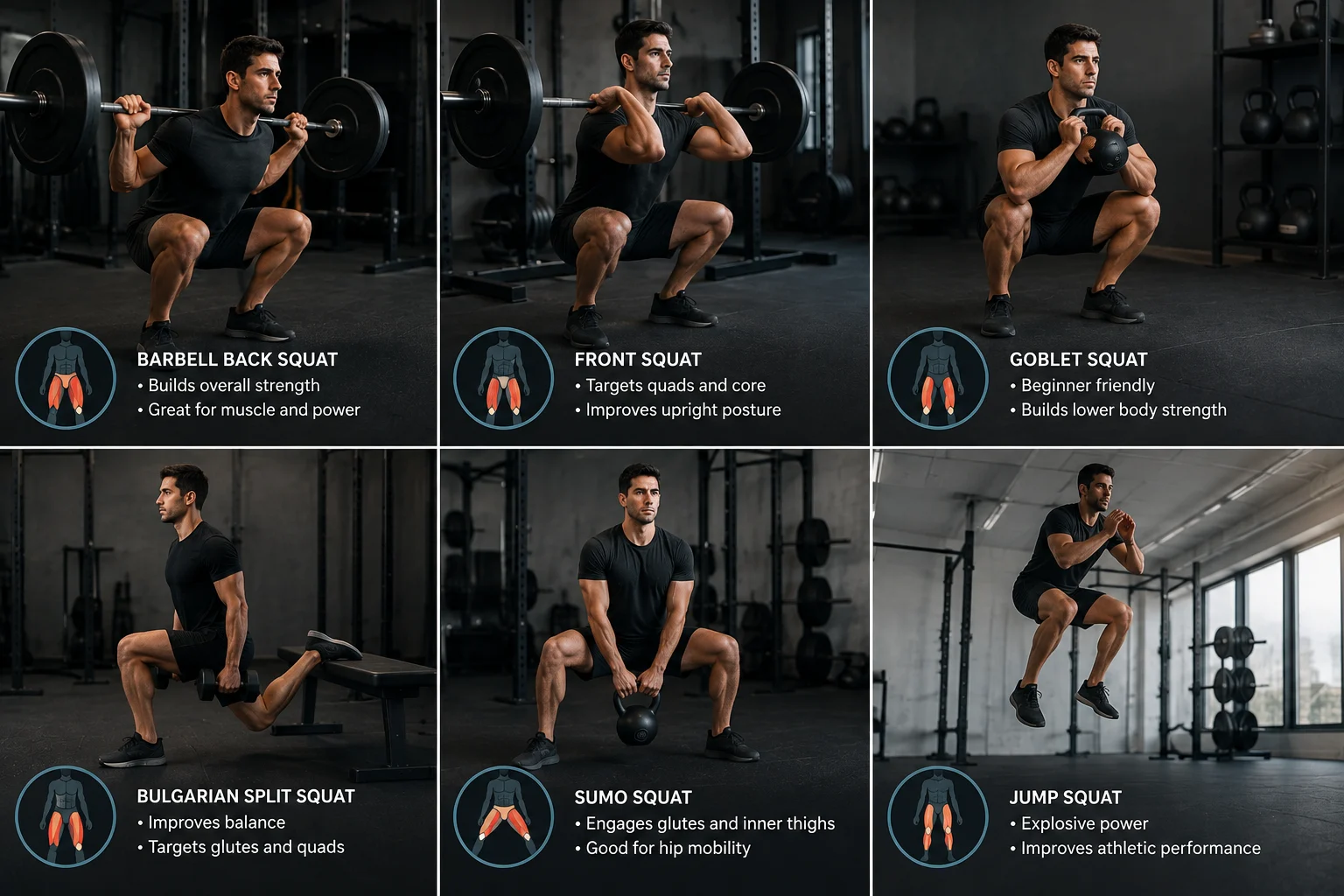
Not every squat variation serves the same purpose. Picking the right one depends on your goal, your experience level, and sometimes your joint history.
- Back squat (barbell) – the standard for building maximum strength and the version used in competition
- Front squat – shifts more emphasis to the quads, demands more core and upper back strength, and keeps the torso more upright
- Goblet squat – holding a single weight at chest height, ideal for beginners learning depth and bracing before adding a barbell
- Bulgarian split squat – a single-leg variation that builds unilateral strength and exposes imbalances between sides
- Box squat – squatting to a box for a controlled depth, useful for beginners learning consistent range of motion or lifters coming back from injury
If you’re new to training, starting with a goblet squat or box squat and working toward a barbell back squat is a smarter progression than jumping straight under a loaded bar. This is the same logic behind the big three lifts in powerlifting: master the pattern with manageable weight before chasing a number.
How Often Should You Squat for These Benefits?
Most lifters get solid results squatting two to three times per week, though this depends heavily on training age, recovery capacity, and what else is on the program that week. Someone brand new to lifting can often squat more frequently at lighter loads since the nervous system fatigue is lower. A more advanced lifter pushing heavier weights typically needs more recovery between heavy squat sessions.
The order of priorities matters more than the frequency number itself. Get the form right first. Add load second. Increase frequency third. Lifters who skip straight to loading heavy weight onto shaky technique tend to hit plateaus or injuries faster than lifters who take the slower, more deliberate route. If you’re just starting powerlifting, this order isn’t optional, it’s the difference between building a foundation and building bad habits you’ll have to unlearn later.
Who Should Be Careful With Squats?
This isn’t a case for avoiding squats altogether. It’s a case for adjusting them to fit your situation.
- Existing knee, hip, or back conditions. Regressions like box squats, goblet squats, or a reduced range of motion can often let you keep training the pattern safely. Work with a physical therapist or coach to figure out what version fits your situation.
- Pregnancy. Bodyweight or lightly loaded squats are often fine well into pregnancy for people who were already training, but this is a conversation to have with a doctor or physical therapist, not something to guess at from a blog post.
- Recovering from injury. Ease back in with reduced range of motion and lighter loads, and don’t rush the return to your previous numbers just because you remember what you used to lift.
If squatting causes sharp pain, not the normal burn of a hard set, that’s a signal to stop and get it checked rather than push through.
Tracking Progress and Proving Your Strength
A lot of lifters plateau not because their programming is wrong, but because they have no real record of what they’re actually doing. Memory is unreliable, and it’s easy to convince yourself you hit depth on a personal record when you didn’t quite get there.
This is where structured tracking and outside verification start to matter more than most people expect. A squat that’s judged against a consistent standard, rather than self-reported, tells you the truth about where you stand. That’s the whole idea behind platforms built around verified lifts: your numbers only mean something if someone else can confirm you actually hit the standard. GymLeague works this way, with lifters filming and submitting their squats for judging against the official depth standard, climbing a leaderboard based on verified results rather than claimed ones. The platform caps submissions at four to five uploads a month, which keeps the process focused on quality attempts rather than spamming submissions until one gets approved.
Key Takeaways
- Squats train the quads, glutes, hamstrings, core, and lower back together in a single movement, unlike isolation exercises.
- The strength built carries over into daily tasks like standing, climbing stairs, and lifting objects safely.
- Athletes across sports rely on squats as a foundation for speed and explosive power.
- Compound lifts like squats produce a stronger hormonal response and contribute to long-term metabolic rate through muscle building.
- Done with proper form, squats strengthen joints rather than damage them. Most injuries come from technique errors, not the exercise itself.
- Different squat variations serve different goals, and progressing from bodyweight to loaded barbell work in the right order matters more than rushing to add plates.
- Verified, tracked lifts give you an honest picture of your progress instead of relying on memory or guesswork.
If you’re ready to see how your squat actually stacks up, GymLeague gives you a straightforward way to submit your squat for verification and find out where you rank.