Deadlift

● EVERY LIFT VERIFIED

The GymLeague Deadlift Competition

The king of raw strength. Pull the bar from the floor to a full, controlledlockout, submit your video, and earn a verified place on the deadliftleaderboard — from your own gym.

Conventional & sumo

One lockout standard

Any level

No qualifying total

Year-round

No meet day needed

Every pull reviewed

Video verification

What Is the GymLeagueDeadlift Competition?
The GymLeague deadlift competition is an ongoing online challenge where every pull is judged against the same official standards before it earns a ranking. The deadlift is the simplest lift to describe and the easiest to fudge on video — soft lockouts and early drops are everywhere. Here, a deadlift only counts once it’s been reviewed.

Who can participate. Anyone, at any level. There are no qualifying totals. Conventional and sumo stances are both welcome, judged under the same lockout standard.

How the competition works. Record your heaviest clean pull in one continuous video, upload it with your competition details, and the GymLeague team reviews it against the rulebook. Approved pulls hit the leaderboard; rejected pulls come back with the reason.

Why verified lifts matter. A deadlift PR is the number lifters brag about most — which is exactly why it should be the number with the most proof behind it. Verification makes every kilogram on the board mean the same thing.

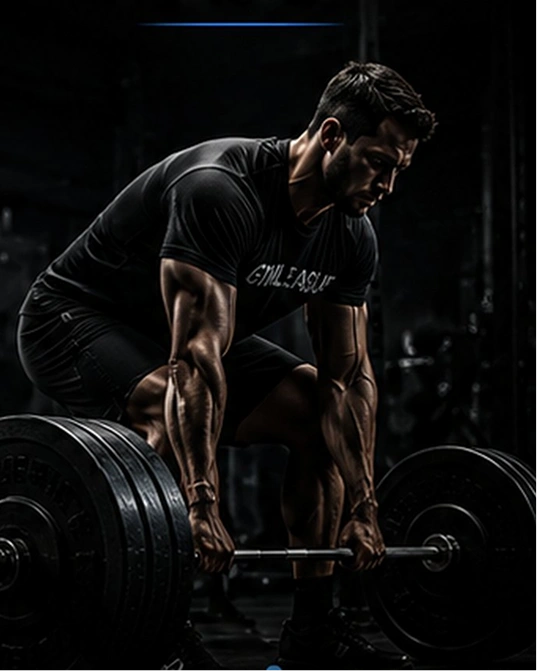
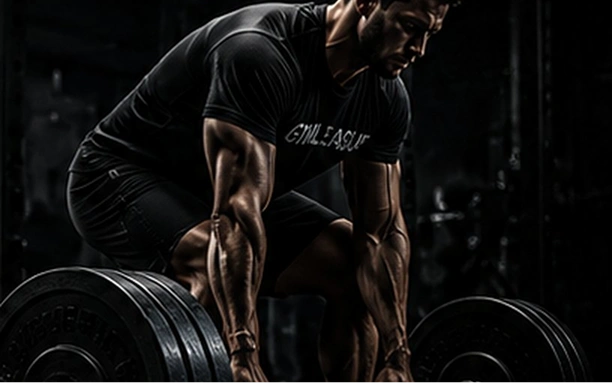
The setup decides the pull: bar over mid-foot, slack taken out, brace set before
the plates leave the floor.

Official Deadlift Competition Standards
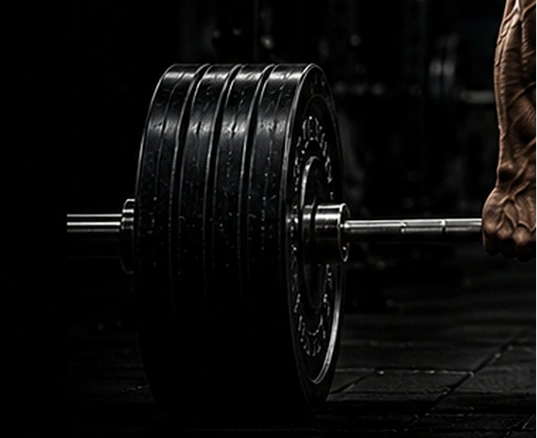
The bar must start motionless on the floor with the plates clearly visible in frame.

Starting Position

The bar starts motionless on the floor, loaded with visible plates. The lift begins the moment the bar breaks from the ground — no rolling starts that turn into a hitch.

Grip & Setup

Double overhand, mixed grip, and hook grip are all allowed. Lifting straps are not — grip is part of the test. Conventional and sumo stances are both legal.

Pull to Full Lockout

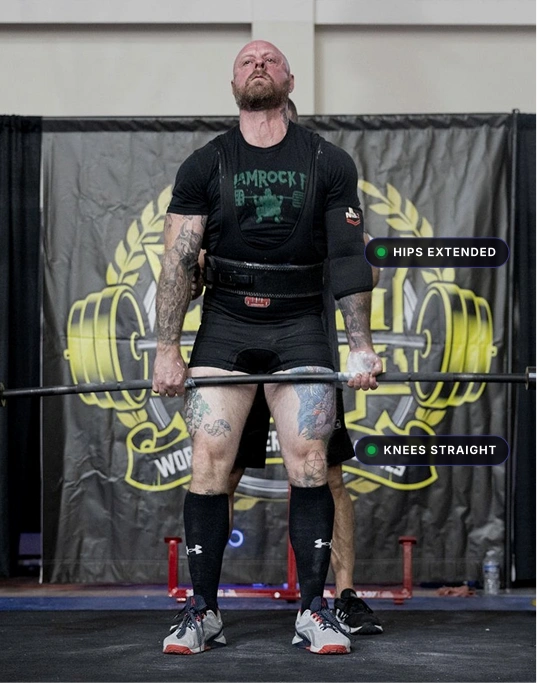
The bar travels from the floor to a full standing position in one continuous motion: hips and knees fully extended, shoulders back, bar under control at the top.

Controlled Finish

Hold the lockout visibly before returning the bar to the floor under control. Dropping the bar the instant your hips extend makes the lockout impossible to judge.

VALID LIFT

INVALID LIFT

“Without one standard for where a deadlift ends, a 300 kg pull to mid-thigh and a 300 kg completed deadlift would score the same.”

WHY THE LOCKOUT STANDARD EXISTS

What a Legal Lockout Looks Like

Hip and knee extension. At the top of the pull, your hips and knees are completely straight — not almost straight. Soft knees are the single most common reason a deadlift gets rejected.

Shoulder position. Your torso finishes upright with shoulders back, in line with your hips. You don’t need an exaggerated lean-back; you do need to be clearly standing tall.

Why lockout matters. The lockout is the finish line of the lift. The standard is what keeps the leaderboard honest: every ranked pull ended in the same place.

Deadlift Competition

A finished pull: hips and knees fully extended, shoulders back, bar under control. This is where the lift ends — anything less is a no-lift.

Common Reasons a Deadlift Is Rejected

Almost every rejection comes down to one of these six. Check your own video against them before you submit.

1

Incomplete Lockout

Soft knees or hips at the top. The number- one rejection reason. Stand fully tall and hold it.

2

Bar Doesn't Reach the Final Position

The pull stalls at the thighs or the lifter never reaches an upright standing position.

3

Hips or Knees Not Fully Extended

Leaning back to fake a lockout while the knees stay bent doesn't pass review — extension must be complete.

4

Dropping the Bar Too Early

Releasing the bar the moment you reach the top makes the lockout unjudgeable. Hold it visibly first.

5

Loss of Control

Hitching the bar up the thighs, ramping it in small jerks, or losing your grip mid-lift invalidates the attempt.

6

Poor Video Angle

If the judges can't see your hips, knees, and the plates, they can't approve the pull. Film from a front-side angle with your full body in frame.

How to Join the Deadlift Challenge

Four steps from your last working set to a ranked, verified deadlift.

STEP 01

Record Your Lift

Film your pull in one continuous, uneditedvideo — full body, plates, and lockoutclearly visible.

STEP 02

Upload Your Video

Submit your attempt through GymLeaguewith the weight lifted and the requiredcompetition details.

STEP 03

Lift Verification

Your deadlift is reviewed against theofficial rulebook — lockout, control,continuity, and video quality.

STEP 04

Earn Your Position

Approved deadlifts appear on theleaderboard and count toward yourcompetition total.

Tips for a Successful Competition Deadlift

Setup Tips

Pulling Technique

Lockout Tips

Recording & Preparation

Why Join the GymLeague Deadlift Competition?

Verified Results

Every ranked pull has been reviewed. Your deadlift number carries proof, not just plates.

Fair Judging Standards

Conventional or sumo, beginner or veteran — one rulebook and one lockout standard for everyone.

Public Leaderboards

See exactly where your pull stands against lifters from other gyms and countries.

Track Your Progress

Every approved deadlift builds a verified strength history you can look back on.

Compete Throughout the Year

No meet day needed. When you're ready to pull heavier, the platform is ready to judge it.

One Standard Worldwide

The same rulebook applies in every gym and every country, so the board compares like with like.

Complete the Big Three

Your deadlift is one third of your total. Learn the standards for the other two competition lifts.

Squat Competition

Proper depth, full lockout, complete control. See the official squat standards.
Bench Press Competition

Controlled press from chest to full lockout. See the official bench pressstandards.

Bench Press Competition FAQs

Is sumo deadlift allowed?

Yes. Both conventional and sumo stances are legal and compete on the same leaderboard, judged under the same lockout standard: hips and knees fully extended, shoulders upright.

No. Grip strength is part of the test, and straps are banned in competition — the same rule used by every major powerlifting federation. Chalk, a belt, and mixed or hook grip are all allowed.

A hitch is when the bar moves up your thighs in small, jerky increments — resting on the legs and re-lifting. The pull must be one continuous upward motion. If the bar keeps moving up, even slowly, it’s a legal grind.

Yes. Establish and hold your lockout visibly first, then return the bar to the floor under control. Dropping the bar from the top makes the attempt impossible to approve.

No. Competition deadlifts start from a dead stop on the floor with standard-height plates. Block pulls and rack pulls are great training tools, but they don’t qualify for the leaderboard.

A front-side angle where your hips, knees, and the plates are all clearly visible, with your full body in frame for the entire lift. Angles that hide the lockout are a common rejection reason.

You’ll see the reason — for example, an incomplete lockout or an early drop. Fix the issue and submit again. Rejections don’t count against you; only approved lifts matter.

As many as you like throughout the competition period. Each attempt is reviewed on its own, and a heavier approved pull replaces your previous verified best.

Pull. Prove It. Rank.

The deadlift doesn’t lie — and neither does a verified leaderboard. Record your
best pull, submit it for review, and take your place in the rankings.

Scroll to Top